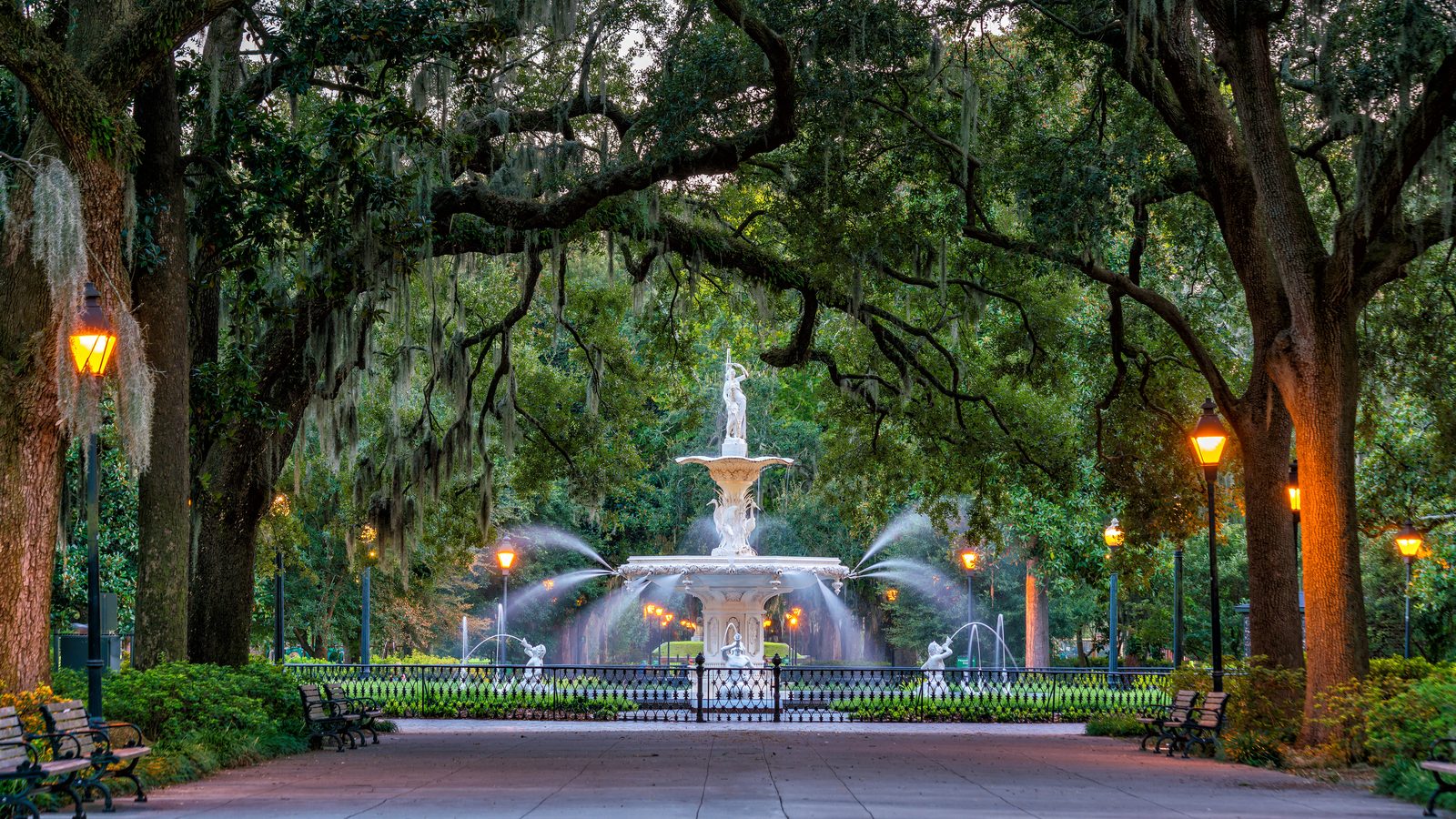


The National Park Service records that the Secretary of the Interior designated the Savannah Historic District a National Historic Landmark on November 13, 1966. The 1966 landmark documentation describes James Edward Oglethorpe's 1733 town plan: wards organized around public squares, with trust lots for civic buildings and house lots for dwellings. That plan is why so many people begin a Savannah search among the squares, then compare those streets with later neighborhoods farther from the river.
A National Historic Landmark designation is a federal historic recognition. It is not a price, an appraisal, or a guarantee about what a buyer may do to a building. Local zoning and design review are separate, and they are what usually control permits for work on a specific property.
The local Downtown Historic District and the Board of Review
The Chatham County-Savannah Metropolitan Planning Commission (MPC) describes the Savannah Downtown Historic District as established in 1966 and as one of the oldest local historic districts in the country. The overlay, the MPC says, was developed to preserve the city's historic character and to ensure that development recognizes, protects, and enhances Savannah's historic architectural heritage and city plan. The Savannah Historic District Board of Review (HDBR) reviews projects in that district.
According to the MPC, the HDBR was established in 1973 to protect property associated with the Landmark Historic District. It has nine members appointed by the Mayor and Aldermen of the City of Savannah, with staff support from the MPC. The board meets the second Wednesday of the month at 1:00 p.m. at 112 E. State St. Meetings are open to the public. The MPC notes a meeting cutoff time of 3:00 p.m. on the published cutoff dates, which can change, so use the official calendar.
The HDBR reviews and grants Certificates of Appropriateness for work in the Savannah Downtown Historic District. Official application materials cover staff reviews, additions, demolitions, fences, new construction, accessory buildings, rehabilitation and alterations, and illuminated signs, among other items. Special exceptions are filed with the City of Savannah. Those forms and checklists are published on the MPC Applications and Forms page.
A listing photo is not a substitute for the city's published historic standards or for a Certificate of Appropriateness.
What this means if you are buying or selling
If you want to change a building, add on, replace windows or a fence, or plan new construction in the local district, budget time for design review. Not every building in the City of Savannah is in the Downtown Historic District, and not every building inside a historic designation is treated the same way. MPC meeting records often distinguish contributing resources in the National Historic Landmark District and the local Downtown Historic District. Confirm the status of the specific address with the City or the MPC before you assume what will be allowed.
Savannah also has other historic resources and overlays beyond the downtown landmark area. This page does not attempt a complete inventory. The MPC Historic Preservation Department describes its work as protecting historic resources in the City of Savannah and Chatham County through local zoning ordinances and the Secretary of the Interior's Standards. If an address sits outside downtown, still ask whether another local overlay or review applies.
Flood maps, school zones, and taxes are separate from historic review. Look up flood zones at the FEMA Flood Map Service Center, and confirm schools with the Savannah-Chatham County Public School System.
Reading citywide Census figures alongside downtown streets
Census Bureau QuickFacts for Savannah city report a 2020 population of 147,780 and a July 1, 2025 estimate of 149,440. In the 2020-2024 American Community Survey estimates, the owner-occupied housing rate was 45.4%, the median value of owner-occupied housing units was $248,900, and median household income was $57,137. Those are citywide figures. They mix downtown wards with later neighborhoods and should not be read as the price of a square-side house.
When you are ready to look, browse the Savannah area guide, open the neighborhood map, or contact Steven to tour homes. He can help you remember to verify historic status, but official review sits with the City and the HDBR.
Common questions
Is every house in Savannah in the Historic District?
No. The National Historic Landmark designation and the local Downtown Historic District have defined boundaries. Confirm the status of a specific address with the City of Savannah or the Metropolitan Planning Commission.
Do I need approval before I renovate a downtown historic property?
Work in the local Savannah Downtown Historic District is reviewed by the Historic District Board of Review, which grants Certificates of Appropriateness. Official checklists cover many types of work, including alterations, additions, fences, and new construction. Ask the MPC or the City before you start.
Does landmark status tell me what a home will sell for?
No. The 1966 National Historic Landmark designation is a historic recognition, not an appraisal or a current list price.
Sources
Figures and program rules can change. Check the official page or a participating professional for current details.
- National Park Service, National Historic Landmarks by state (Savannah Historic District, November 13, 1966)
- National Park Service, Savannah Historic District landmark documentation
- Chatham County-Savannah Metropolitan Planning Commission, Savannah Downtown Historic District
- Savannah Historic District Board of Review
- MPC Historic Preservation, Applications and Forms
- U.S. Census Bureau, QuickFacts: Savannah city, Georgia
- Savannah-Chatham County Public School System
- FEMA Flood Map Service Center